Home · From the tasting table
From the tasting table
一葉千味: The Day My Old Matcha Turned Into Oolong
A year-old tin of Uji matcha, eight minutes in a toaster oven, and a jar of dark chocolate whip — the true story of how stale matcha became dark hojicha chocolate, and what it taught me about one leaf's many lives.

一Chapter 1: The Gift
Yesterday, a present landed in my hands: oolong tea chocolate. One bite, and the roasted tea and dark cacao melted into each other. Then came the 回甘, that sweet echo that shows up a few seconds after the bitterness fades.
I kept thinking about it all evening. How could a tea leaf and a cocoa bean, grown worlds apart, taste like old friends?
回甘 (huí gān) means "returning sweetness." Great tea and great dark chocolate both do it: bitter first, sweet second.
二Chapter 2: The Forgotten Box
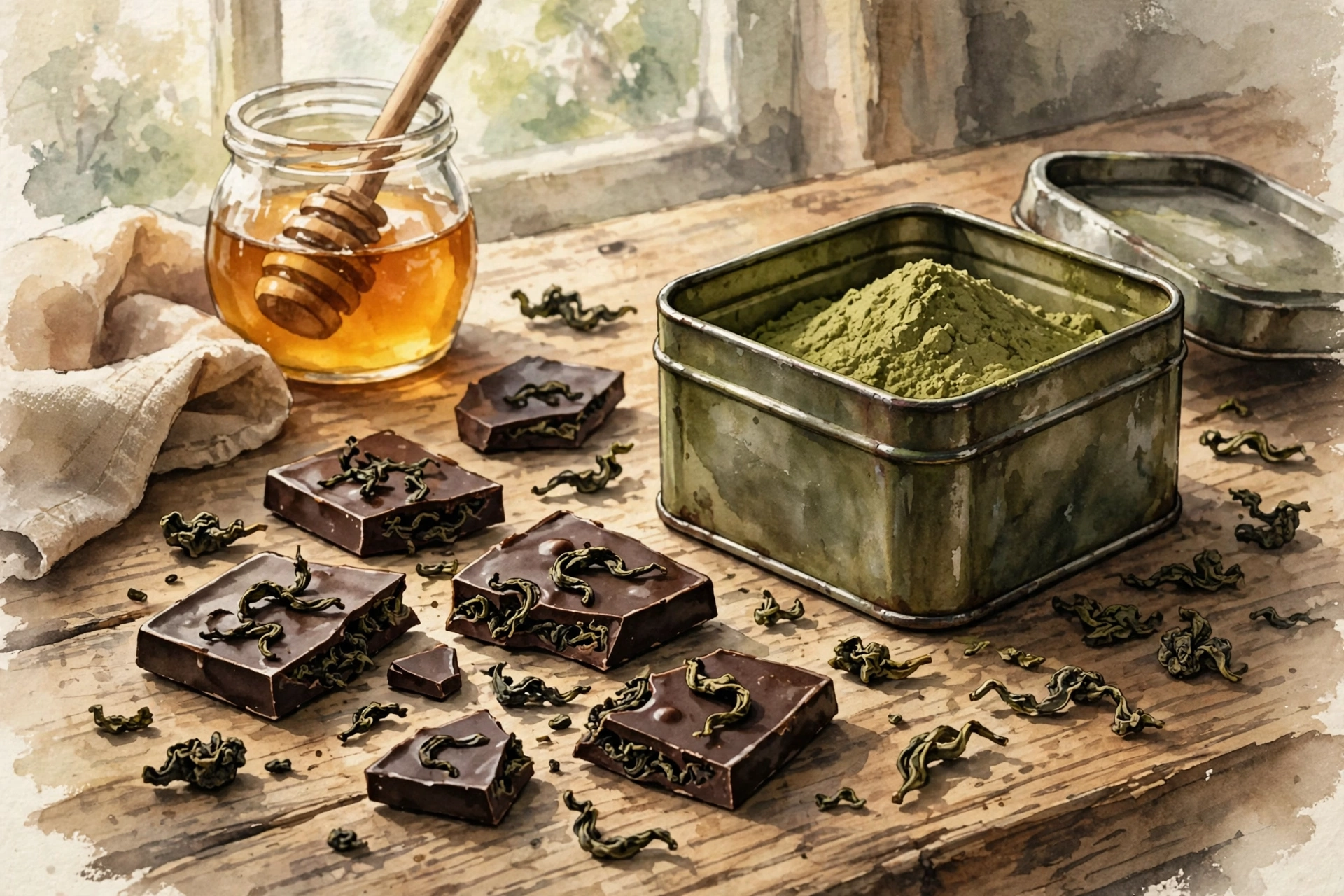
This morning, I went searching for my matcha adventure of the day. Behind the newer tins sat a box of organic matcha that had waited on the shelf for almost a year. Its green had gone a little dull, and its smell was quieter than I remembered.
This wasn't some bargain tin. It was a hundred-dollar tin from Japan — 120 grams, and well over half of it still sat there, stalled. I remember when it was fresh: drinking it was like drinking the field of Uji itself, all grass and sunlight and deep green umami. That's what made the rescue matter — this was good tea, not trash tea.
Most people would toss it. But it smelled clean and dry, with no musty notes or damp clumps. So I asked a different question: what if old matcha isn't finished, just waiting for a new job?
Air, light, and heat slowly fade matcha's green chlorophyll and its fresh aroma. It loses flavor long before it goes bad, but a musty smell or any mold means it goes straight in the trash.
三Chapter 3: Toaster Oven Magic
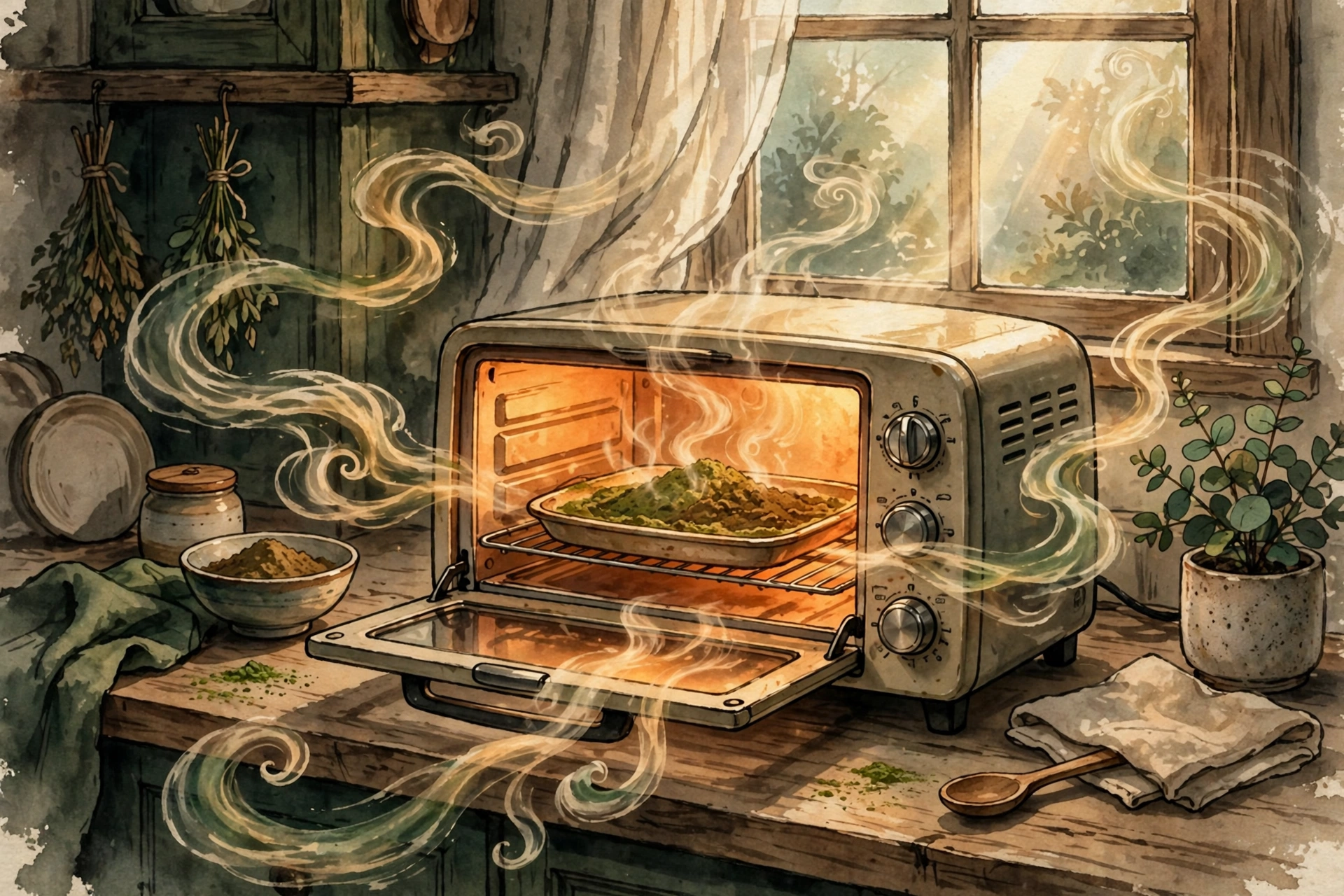
I spread the powder on a small tray, set my little toaster oven to 280°F (about 138°C), and gave it 8 minutes. Low and short, because matcha is so fine it can go from toasted to burnt in under a minute.
Inside that tiny oven, something invisible began. The heat made the leaf's natural sugars and amino acids react, building brand-new flavor molecules that didn't exist a minute before.
This is the Maillard reaction, named after French chemist Louis-Camille Maillard, who described it in 1912. It's the same magic behind toast, seared steak, roasted coffee, and roasted cacao. Think of it as heat teaching the leaf a new language.
四Chapter 4: The Smell That Time-Traveled
First, matcha fragrance spread through the whole kitchen, sweet and grassy, as if every tin had opened at once. Then the smell shifted. A warm, toasty wave rolled in, and suddenly the kitchen smelled like oolong.
It was the smell of yesterday's chocolate. My nose had traveled back exactly one day.
Many Taiwanese oolongs, like 凍頂 (Dong Ding), get a roasting step called 焙火 (bèi huǒ). Japan's ほうじ茶 (hōjicha) is green tea roasted until it turns brown. My toaster oven had just done a tiny version of both.
五Chapter 5: The Chocolate Reunion
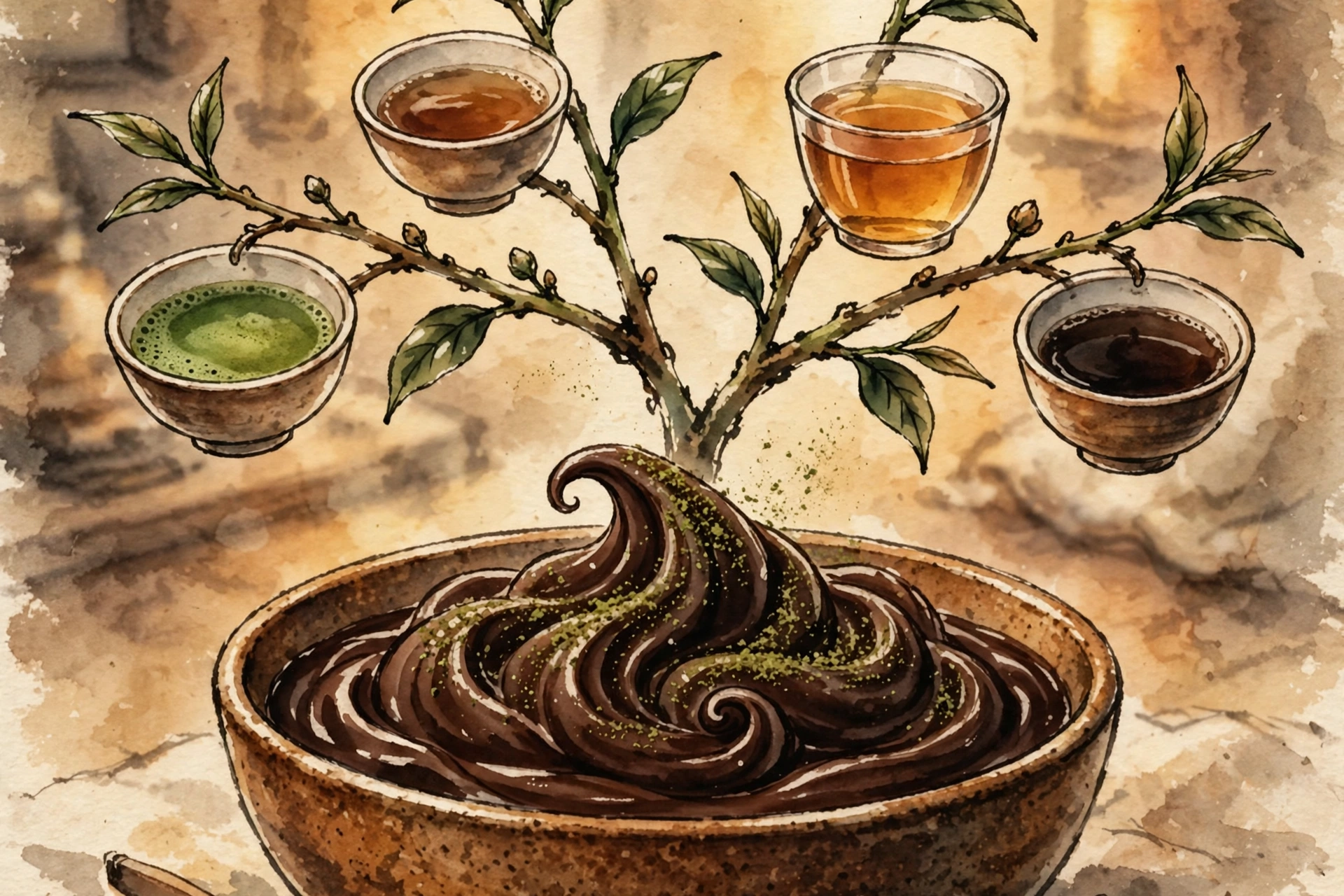
I started tinkering around the kitchen and found a dark chocolate whip sweetened with monk fruit. I stirred in the warm roasted matcha and took a taste.
It was yesterday's oolong chocolate, reborn in my own kitchen, with an even deeper tea flavor. I call it dark hojicha: bitter cacao up front, toasty tea in the middle, and that 回甘 sweetness at the end.
That's when it hit me: one leaf, so many flavors hiding inside. 一葉千味.
Cacao beans are fermented and roasted too, so they carry their own Maillard flavors. Roasted tea and roasted cacao belong to the same toasty family, which is why they pair so easily. Monk fruit (羅漢果, luó hàn guǒ) gets its sweetness from compounds called mogrosides, not sugar.
六Chapter 6: One Leaf, Many Lives
Matcha, hojicha, oolong, and black tea all come from one plant: Camellia sinensis. What changes is how the leaf is grown and processed: shaded or not, oxidized or not, roasted or not.
My toaster oven moved old matcha onto the roasted side of the family, right next to oolong and hojicha.
The Benefits of Making It
The biggest win: a year-old box of matcha I almost threw away became a dessert that tastes like a gift.
Rescues old matcha
Roasting turns faded, flat flavor into a new toasty one.
Can't save matcha that smells musty or shows mold.
Smoother, less bitter
Heat breaks down some of the bitter catechins.
Some of matcha's catechin antioxidants are lost too.
Lower-sugar treat
Monk fruit sweetens without sugar's calories.
Many monk fruit products are blended with other sweeteners, so check the label.
Almost free
Uses tea already sitting on the shelf.
Every toaster oven runs differently, so it's easy to burn.
A science lesson you can taste
Shows the Maillard reaction and how one leaf becomes many teas.
The bright green color and fresh umami are gone.
One honest note: 280°F is likely too low to drive off much caffeine. Treat it as a daytime treat, not a bedtime one.
Is it worth making? Yes, twice over. It turns waste into flavor at almost no cost, and it teaches the same roasting science tea masters use.
Kid's Language Corner
Eight words from today's adventure, each with a silly trick to make it stick.
Old things get dusty and furry
A hairy yak baking cookies
Car, oh, ree: the whole car smells like tea!
A garden hoe roasting tea over a campfire
"Ah, my! So sweet!"
"Oy, she ate it all!"
Sweetness waves goodbye, then shouts "I'm back!"
Ho ho sik? Not sick, just yummy!
古い抹茶を焼くと、美味しい!
(Furui matcha o yaku to, oishii!) — "Bake old matcha, and it's delicious!"
Try It Yourself: Dark Hojicha Chocolate
Roast old matcha at 280°F (138°C) for about 8 minutes, then stir it into dark chocolate.
- Check the matcha: it should smell clean and dry, with no musty notes, damp clumps, or spots.
- Preheat a toaster oven to 280°F (138°C).
- Spread 1 to 2 tablespoons of matcha in a thin layer on foil or parchment, kept away from the heating elements.
- Roast about 8 minutes, peeking at 4 and 6 minutes. Stop when it smells toasty and turns olive-brown.
- Cool for 2 minutes, then sift out any clumps.
- Stir about 1 teaspoon into a serving of monk fruit dark chocolate whip, taste, and adjust.
- Store leftover roasted matcha in an airtight jar, away from light.
Want to experiment? Roast one batch at 260°F and another at 300°F, then taste them side by side. Lighter roasts keep more matcha; darker roasts taste more like oolong.
One leaf, two rooms.
Four teas, one plant, endless stories. Join the waitlist and taste which chapter calls to you.
Join the waitlist